


Brooks Hyperion 3 review

Brooks Hyperion 3 Verdict
The pros
- Secure and comfortable upper
- Big, stretchy tongue loop
- Light, springy cushion
- Improved grip from last model
- Versatile use
The cons
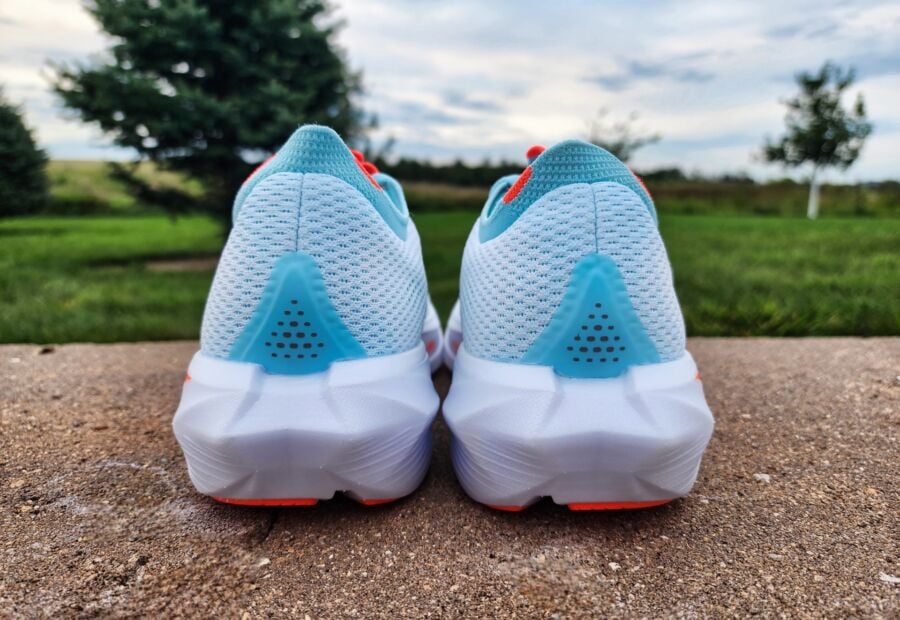
- Bulky heel


Rating breakdown
Facts / Specs


Size/Fit


Cushioning & ride


Usage

Who should buy the Brooks Hyperion 3 ?
Neutral runners looking for one shoe to comfortably and efficiently pound out intervals, tempo runs, recovery runs, and medium-long runs up to about 10 miles will enjoy this shoe. Runners with moderate stability needs may prefer this as their speed shoe in training and racing but opt for a more heavy-duty shoe for everything else.
Who should not buy the Brooks Hyperion 3 ?
Do not buy this shoe if you have wide feet, particularly with toes similar length; need a lot of support against overpronation; or need a long-distance training shoe.
Brooks Hyperion 3 Introduction

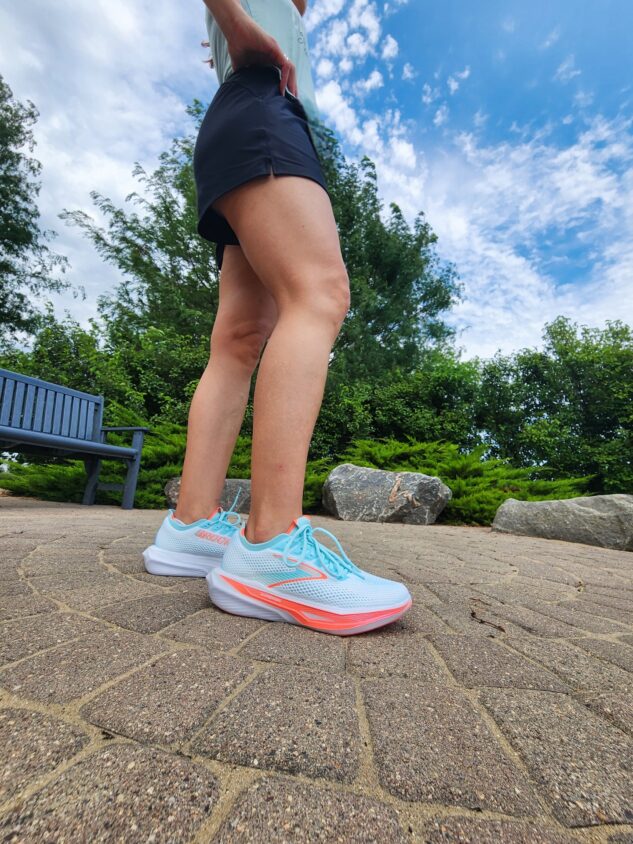
The Hyperion shoes are one of the newest series of shoes from Brooks, offering Hyperion, Hyperion Max, PYNRS x Hyperion Max, Hyperion Elite, and mid (MD) and long (LD) distance racing spikes in their 2nd or 3rd rendition. The Hyperion GTS (stability) line was discontinued in 2025.
Since I ran in Hyperion GTS 2 (and loved it!), I can confidently recommend Hyperion 3 as offering similar low stability to the GTS 2. The 2 was more fun to run in, but the 3 has a more durable outsole.
There was no increase in price with the latest modifications; it stays at $140 USD list price.
Other shoes that provide a running experience like Hyperion include Saucony Endorphin Speed and Puma Deviate Nitro (both plated options), Hoka Mach 6 as a similarly versatile trainer, ASICS Novablast with a little more cushion, and New Balance FuelCell Rebel.
Brooks Hyperion 3 First Impressions

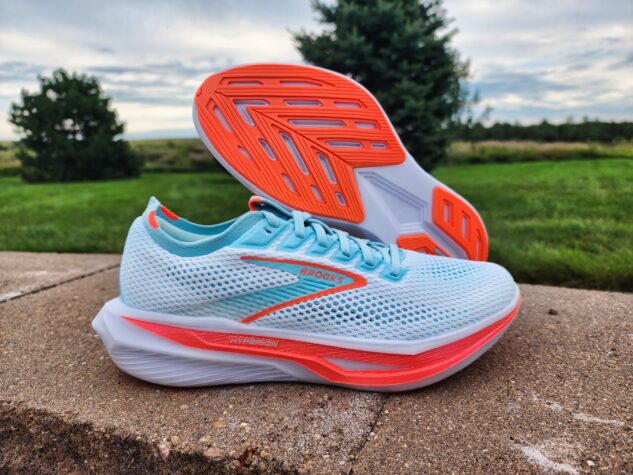
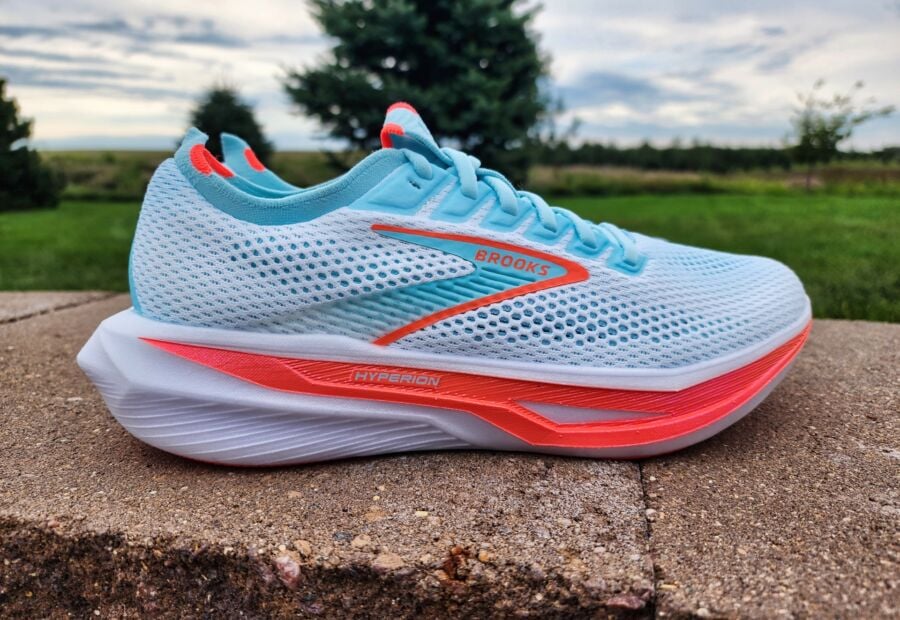
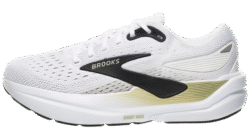
My first look at Hyperion 3 brought a mixed reaction from me: love the classy colorway options, but the change to more of a fully-formed trainer, versus racer, was obvious.
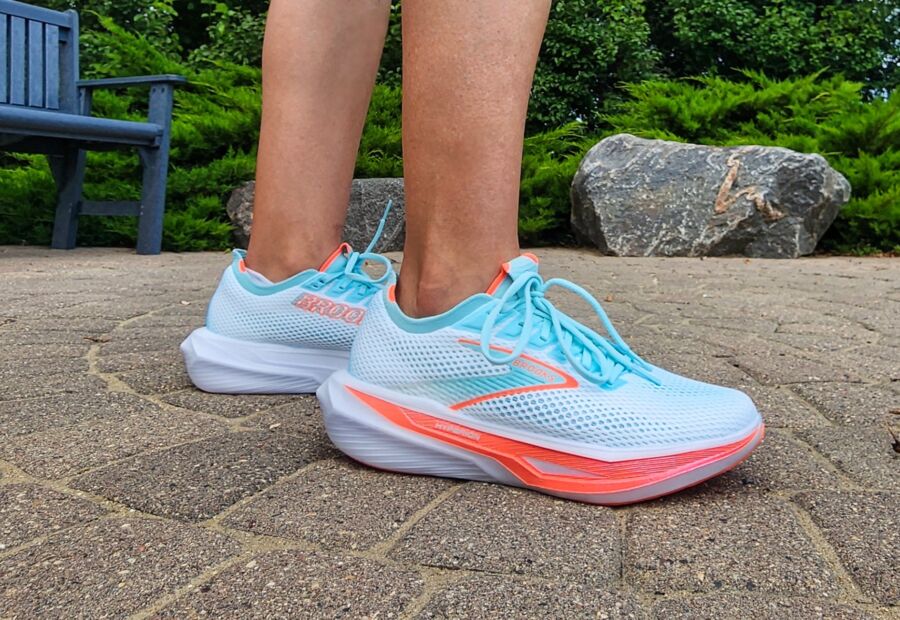
Picking it up, the shoe still feels light; putting it on, I notice the increased cushion all around. As I set out for the first few steps, I notice that Hyperion 3 carries a little more bulk, but as I set into the run, I can barely notice the difference—still there, with the extra foam in the heel, but the ride feels almost the same.
I prefer Hyperion 2’s more race-ready feel, but Hyperion 3’s outsole is a needed change to add miles to the shoe’s life. Both shoes have a fun, responsive ride.
The older shoe is built more like a racing flat; the newer has a similar feel but leans more toward a trainer. The latest version has more midsole, a filled-out heel, and a more built-up upper.
Brooks Hyperion 3 Upper

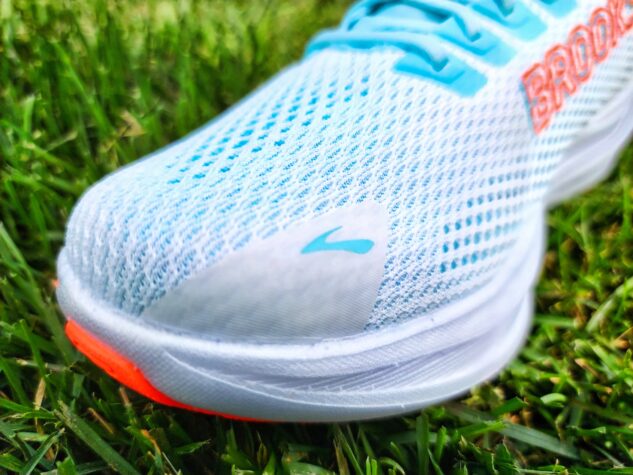
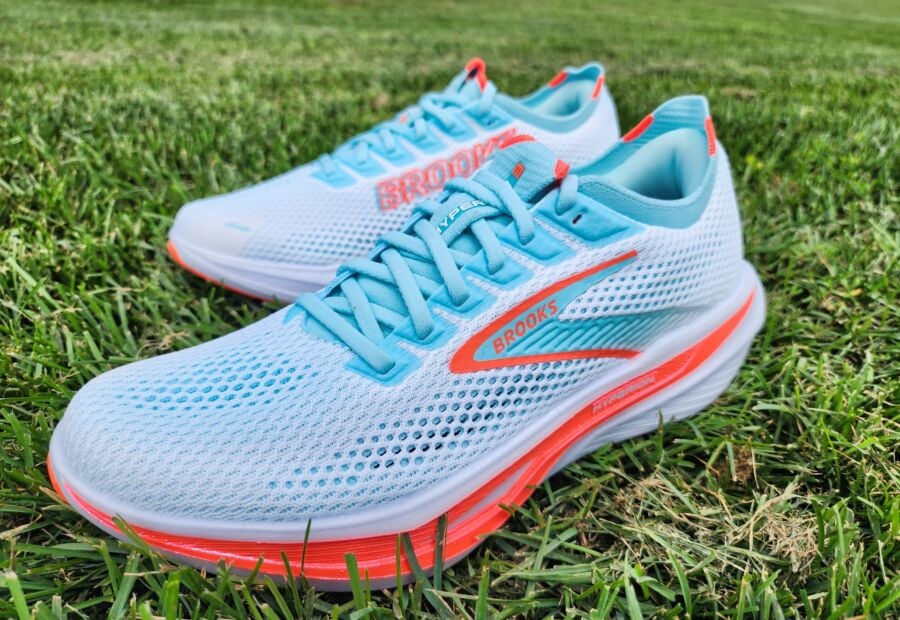
This upper is excellent! Though I miss the streamlined race-ready fit of the 2, for everyday training the update combines breathability with comfort in a non-intrusive way.
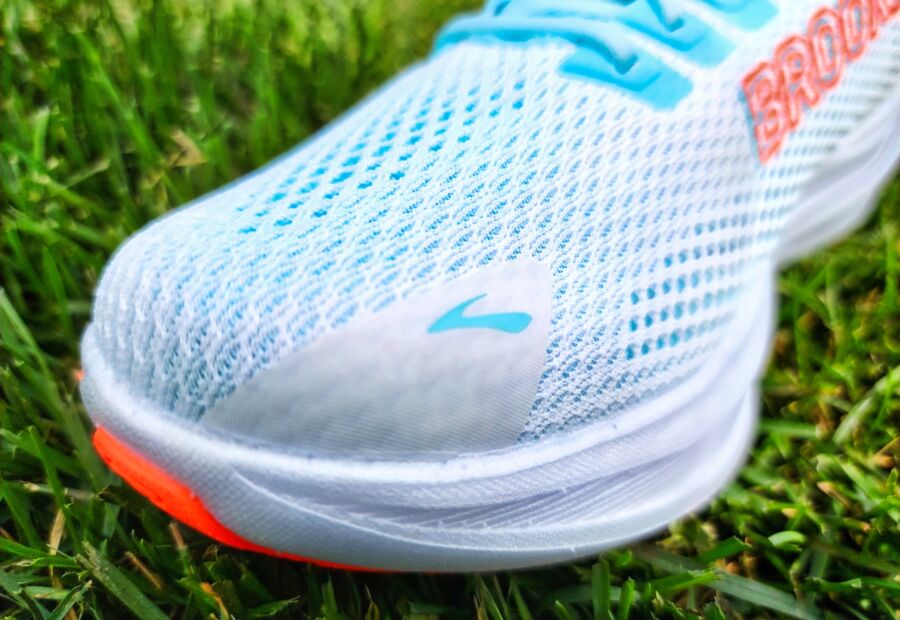
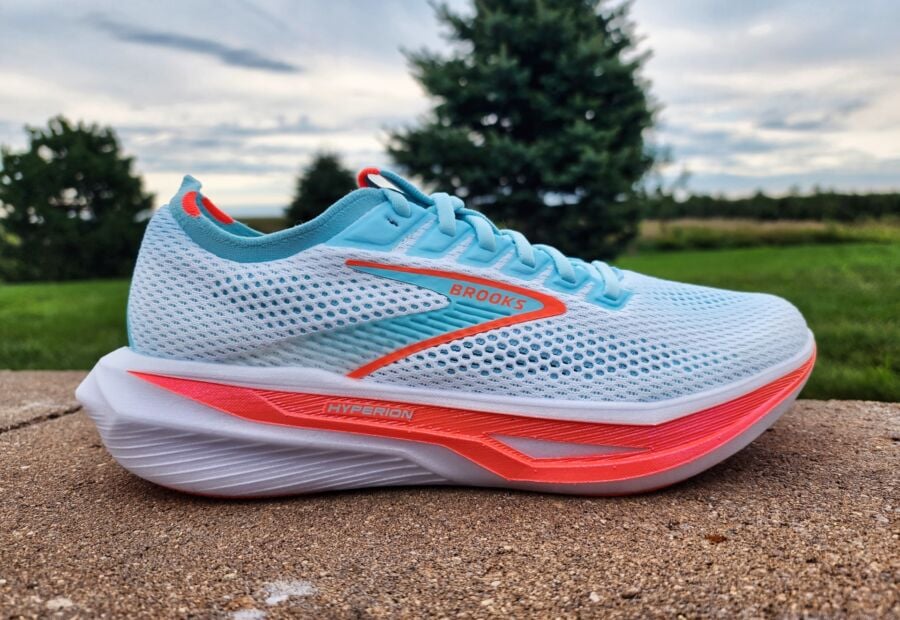
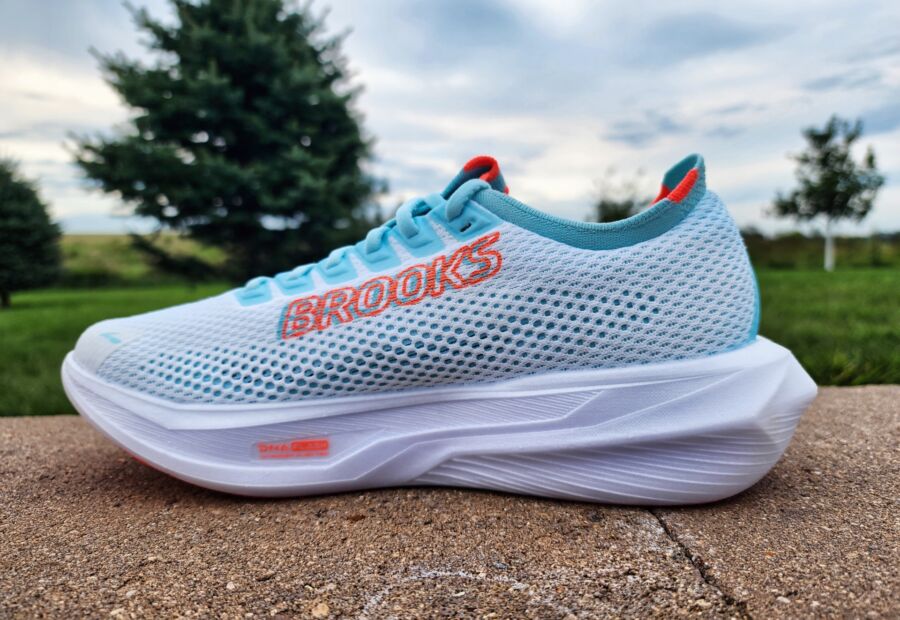
Two layers of strong jacquard knit mesh are layered so that air holes partially overlap on the sides and top of toe box—there’s nothing to stop heat from escaping, which is great for hot summer days or stuffy treadmill runs.

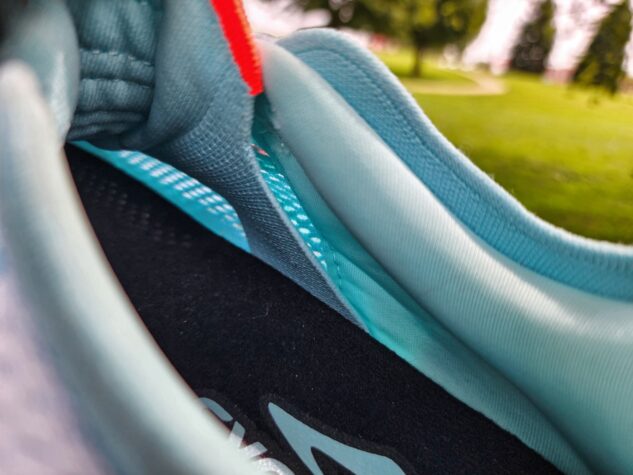
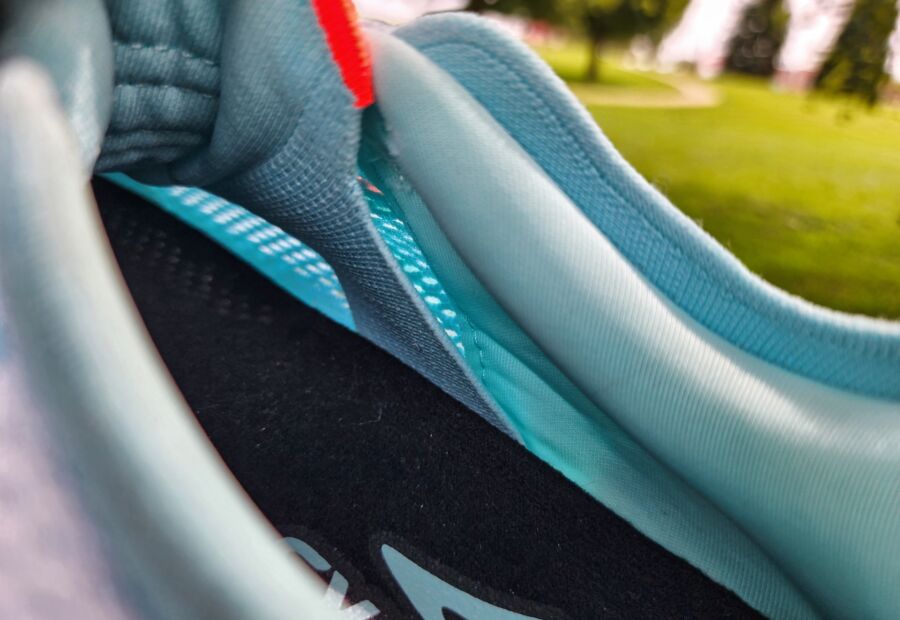
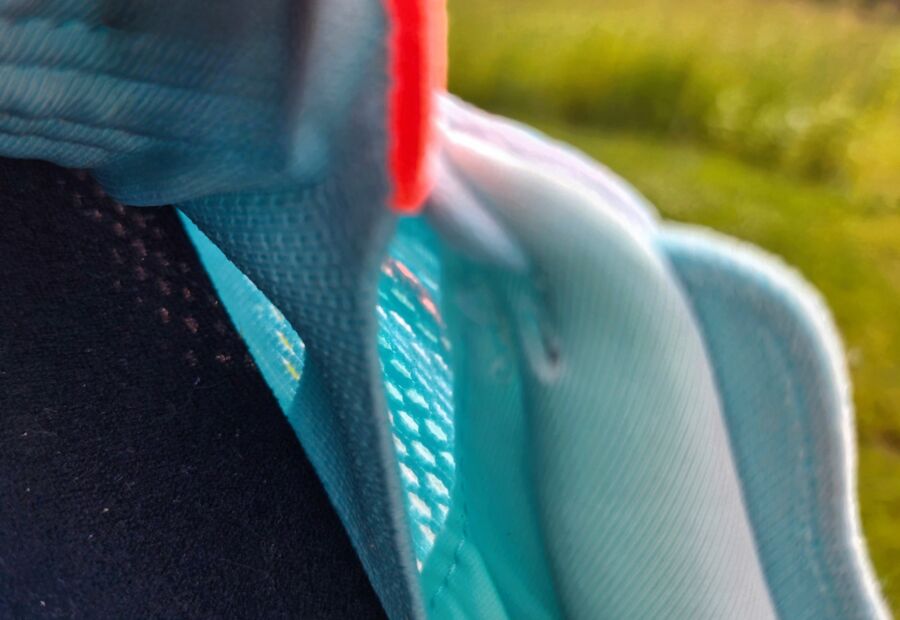
My favorite feature is a wide, easy-to-grab loop on top of a soft, protective tongue. I use the loop every time I put the shoe on to pull the upper up right where I want it—LOVE this! A short pull when untying the shoe loosens the laces for quick removal. Stretchy gussets about an inch wide on both sides of the tongue seamlessly anchor the tongue to the base.

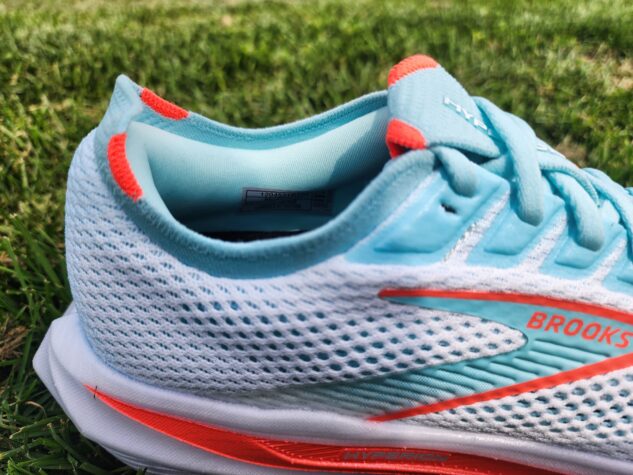
This upper is soft enough to form to my foot, yet it is not overly flexible; it offers accommodation of foot shape within a structured hold. I stuck with my same size as I wore in the 2—the bigger of the two half-sizes I go between.
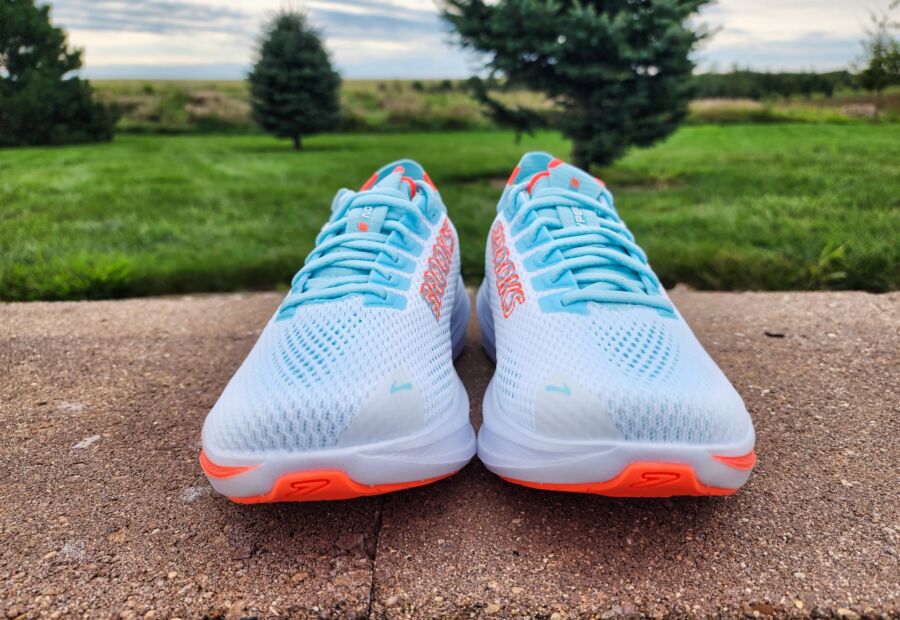
Many users report a more narrow toe box in the 3, but I just put them on back-to-back and do not notice much difference in width at the ball of the foot—only at the tips of the toes. Runners with toes of similar length will want to size up a half size, but those with toes that taper down will not notice much change.
The internal length of the shoe is the same between sizes above the big toe, but the 3 looks longer given the wider profile of the midsole and more tapered toe box.

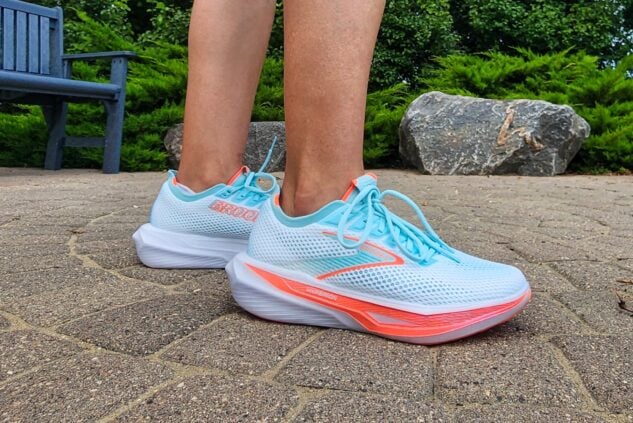
The same soft material in the tongue pads the ankle opening well to lock the heal in. A quality internal heel counter gives the shoe the same heel stability as in the Hyperion GTS 2, which is a big factor in the shoes’ similar stability.
This is an upper design that Brooks should stick with across more models.
Brooks Hyperion 3 Sole Unit

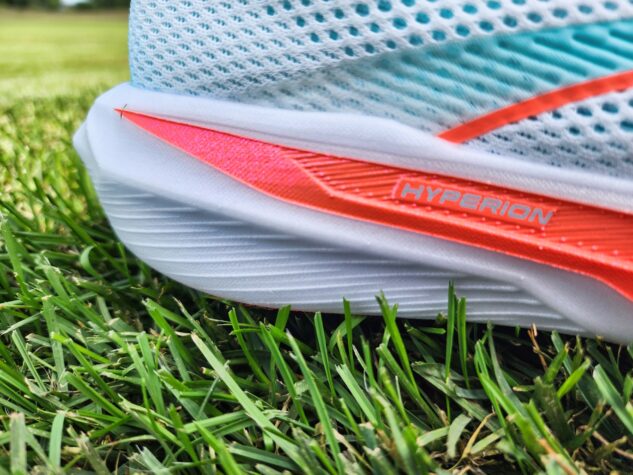
Brooks added 2 mm more nitrogen-infused EVA called DNA FLASH v2. This soft foam is very responsive but loses some of this fast feel as the thickness increases.
The midsole is more pronounced in the heel, where it is filled out with the support of a training shoe, versus the trimmed cut of the 2 that made it function like a racing shoe.
The heel is noticeable in the first few steps of a run, but the ride feels pretty similar to the Hyperion GTS 2 after settling into a pace.

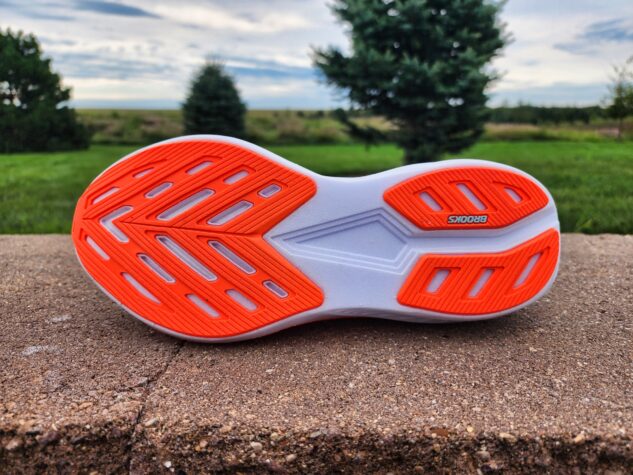
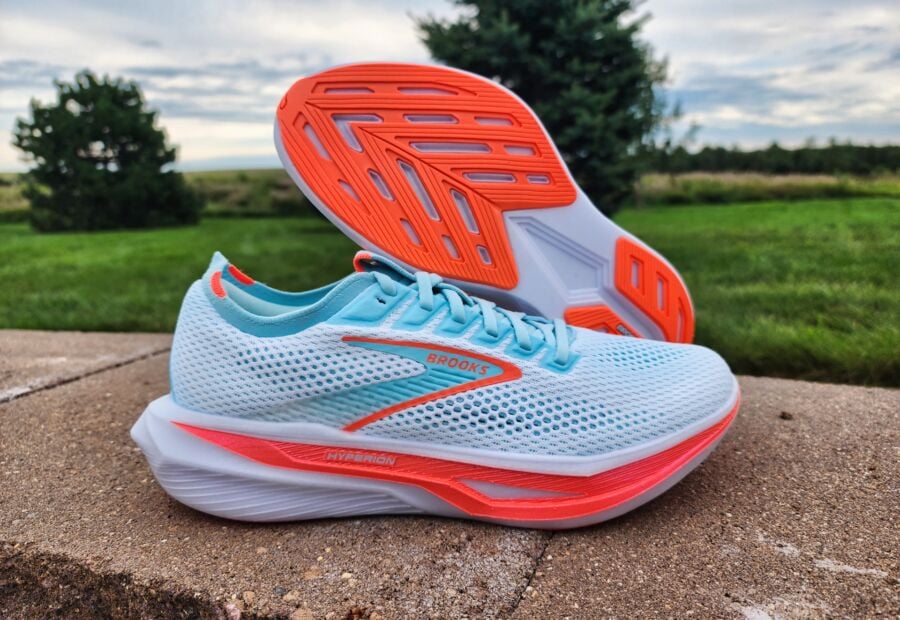
Outsole grip lines are more pronounced on the 3 which gives this version much better durability. With 200 miles on the shoe, I still have great grip, while the forefoot of my 2 is bald.
The foam below this outsole shows some wear on edges of the toe box and heel, but this is more cosmetic than a functional issue.
Brooks Hyperion 3 Conclusions

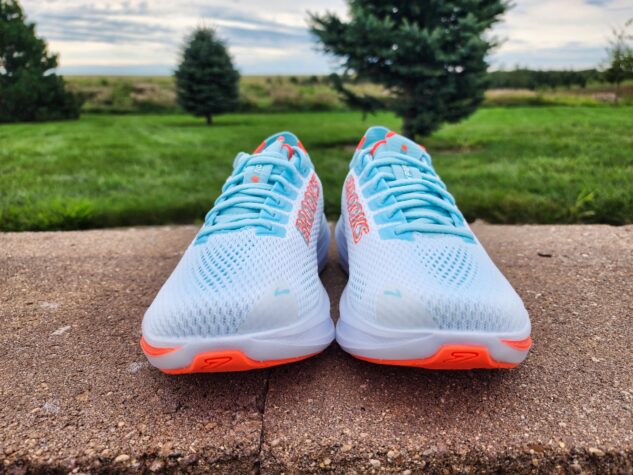
Brooks is trying to bring comfort and speed together in the best ways in the Hyperion line, trying out a more trainer-like shoe in the 3 after a race-ready version in the two.
The new upper is outstanding! This should be their model for neutral and stability shoes as it offers support without stiffness and hits the sweet spot in function and protection with the tongue.
I prefer the midsole of the 2 and outsole of the 3, but the ride is very similar between these versions as I settle into my pace.
Best case, for me, is a version 4 that goes back to the older midsole yet keeps the outsole and upper of the 3. What do you think? Do you like the changes or prefer the older fit?
Why you can trust us
As editorial policy, we do not accept free samples from companies.We purchased this pair of Brooks at Running Warehouse with our own money.
This page contains affiliate links. As an Amazon Associate we earn from qualifying purchases. Read more about our policy.


Reviewed by Kristin

Kristin started running by competing in 400's, 800's and 1600's in track in the late 90's and hasn't stopped since. Running proved better than the endless bump-set-spike of volleyball practice, so Kristin and a friend recruited a wresting coach willing to make kids run and founded their high school's cross country team, which is still going strong.
User feedback (2)

Similar shoes to Brooks Hyperion 3

Brooks Adrenaline GTS 25 Review


Brooks Hyperion Max 3 Review



1 month ago
Race ready means absolutely nothing. What distance?
1 month ago
5k-10k
When I use (and read) “race ready,” I just take it to mean light enough to not get in the way, and a ride that feels fast. The 2 feels more this way than the 3, but the 3 isn’t bad!